Pyle Bluetooth Speaker Manual: Comprehensive Guide
Welcome! This manual provides essential guidance for Pyle Bluetooth speakers (PPHP1037UB, PPHP1237UB, PPHP1537UB, PPHP837UB, PPHP1042B, and more), ensuring safe and optimal performance.
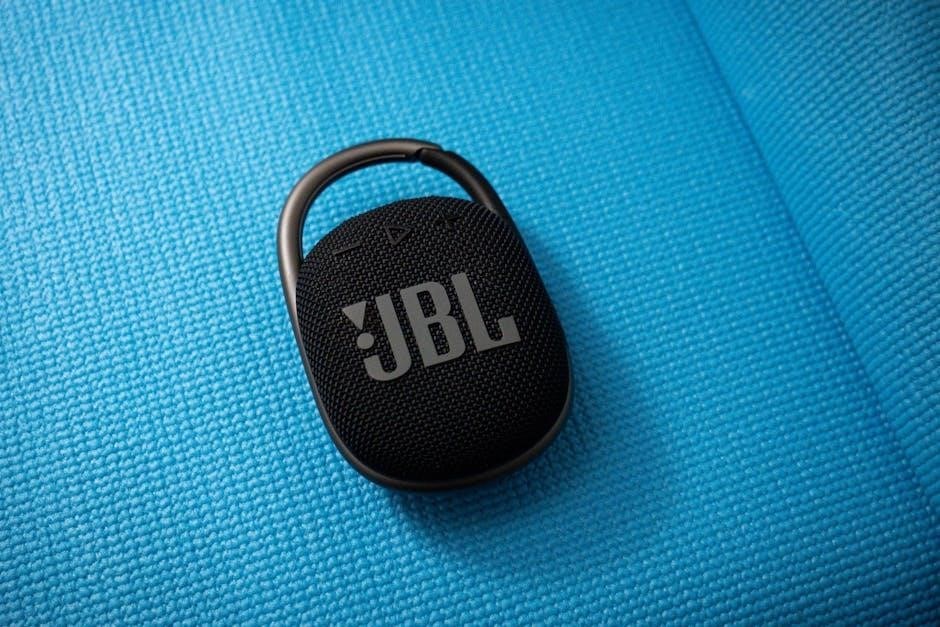
Pyle Bluetooth speakers offer a versatile audio experience, combining portability with powerful sound reproduction. These speakers, including models like the PPHP838B and PPHP1042B, are designed for both indoor and outdoor use, making them ideal for parties, events, or personal listening.
Featuring Bluetooth connectivity, these speakers seamlessly pair with smartphones, tablets, and other devices, allowing for wireless music streaming. Many models also include additional input options such as USB, SD card slots, and auxiliary inputs for broader compatibility.
Pyle speakers often incorporate features like built-in microphones, FM radio, and even recording capabilities (on select models), enhancing their functionality. Prior to operation, carefully review the provided instructions to maximize your investment and ensure safe usage.
Understanding Your Pyle Speaker Model
Identifying your specific Pyle speaker model is crucial for accessing the correct features and troubleshooting information. Common models include PPHP1037UB, PPHP1237UB, PPHP1537UB, PPHP837UB, PPHP838B, and PPHP1042B. Locate the model number typically found on the rear panel or bottom of the unit.
Pyle Bluetooth speaker lines boast diverse features. Many offer rechargeable batteries for portability, while others include powerful PA systems with subwoofers and tweeters. Features like recording functions, party lights, and microphone inputs vary by model.
Referencing your specific model number within this manual, or on the Pyle Audio website (www.pyleaudio.com), will unlock tailored instructions and maximize your speaker’s potential.
Identifying Your Specific Model Number (PPHP1037UB, PPHP1237UB, etc.)
Locating your Pyle speaker’s model number is the first step to accessing accurate support and maximizing its functionality. The model number – such as PPHP1037UB, PPHP1237UB, PPHP1537UB, PPHP837UB, PPHP838B, or PPHP1042B – is typically printed on a label.
Check the rear panel of the speaker, the bottom surface, or within the battery compartment. This unique identifier distinguishes your speaker and unlocks access to specific manuals, troubleshooting guides, and feature explanations on the Pyle Audio website (www.pyleaudio.com).
Having this information readily available will streamline any support requests and ensure you’re utilizing the correct procedures for your device.
Key Features Across Pyle Bluetooth Speaker Lines
Pyle Bluetooth speakers offer a diverse range of features catering to various needs. Common functionalities include Bluetooth connectivity for wireless audio streaming from smartphones and tablets. Many models boast USB and SD card playback, expanding your music sources beyond Bluetooth.
Several speakers, like the PPHP838B and PPHP1042B, incorporate a microphone input for karaoke or public address applications. FM radio functionality is also prevalent, allowing you to tune into local stations. Some advanced models feature a recording function (PPHP1042B) and party lights.
Power outputs vary, ranging from 300W to 600W, and speaker configurations often include subwoofers and tweeters for enhanced audio quality.
Setting Up Your Pyle Bluetooth Speaker
Begin with safety! Ensure the speaker is off and volume is minimized before connecting. Power up and prepare for seamless Bluetooth pairing and operation.
Initial Power-Up and Safety Precautions
Prior to initial use, carefully inspect your Pyle Bluetooth speaker for any visible damage. Ensure the power switch is in the ‘OFF’ position before connecting to a power source. Always use the provided power adapter to avoid damaging the unit.
For safety, keep the speaker away from water and excessive moisture. Do not disassemble or attempt to repair the speaker yourself, as this will void the warranty. Avoid placing heavy objects on top of the speaker.
When powering up, gradually increase the volume to a comfortable level to prevent potential hearing damage. Disconnect the USB/SD card before powering off the speaker to prevent data corruption. Always follow these precautions for a safe and enjoyable experience.
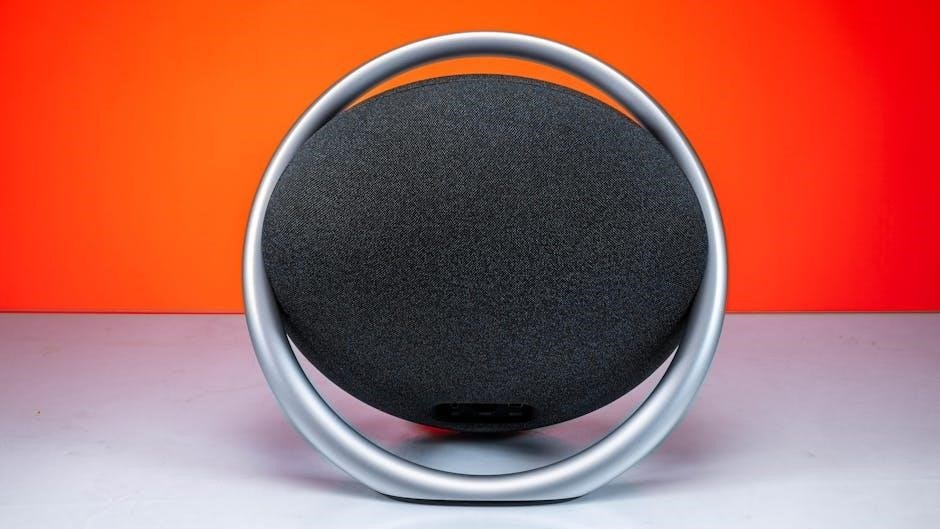
Bluetooth Pairing Instructions
To pair your Pyle speaker, ensure Bluetooth is enabled on your smartphone or tablet. Power on the speaker and activate Bluetooth pairing mode – typically indicated by a flashing light. Locate your speaker’s name in your device’s Bluetooth settings and select it to connect.
A successful connection will usually be confirmed by an audible tone or a solid indicator light. If pairing fails, ensure the speaker isn’t already connected to another device. Move your device closer to the speaker during the pairing process.
For multiple devices, disconnect the current device before attempting to pair a new one. Some models may remember previously paired devices for automatic reconnection.
Pairing with Smartphones and Tablets
Initiate pairing by powering on your Pyle speaker and activating Bluetooth on your smartphone or tablet. Access your device’s settings and navigate to the Bluetooth menu. The speaker should appear in the list of available devices; select it to begin the pairing process.
Confirm the connection when prompted, often requiring a passcode (typically “0000” if requested). A successful pairing is usually indicated by a solid Bluetooth indicator light on the speaker and a connected status on your device.
Troubleshooting pairing issues? Ensure the speaker isn’t already connected to another device and that your device is within range. Restarting both devices can often resolve connectivity problems.
Connecting Multiple Devices
Pyle speakers often support pairing with multiple devices, though simultaneous audio playback may be limited to one source. After successfully pairing with one device, put the speaker into discovery mode again to connect another.
Switching between devices typically involves pausing audio on the current device and initiating playback on the desired one. The speaker should automatically detect and switch to the new audio source. Some models may require manual source selection.
Remember that the speaker may only ‘remember’ a limited number of paired devices. If you exceed this limit, you may need to ‘forget’ older pairings to accommodate new ones through your device’s Bluetooth settings.
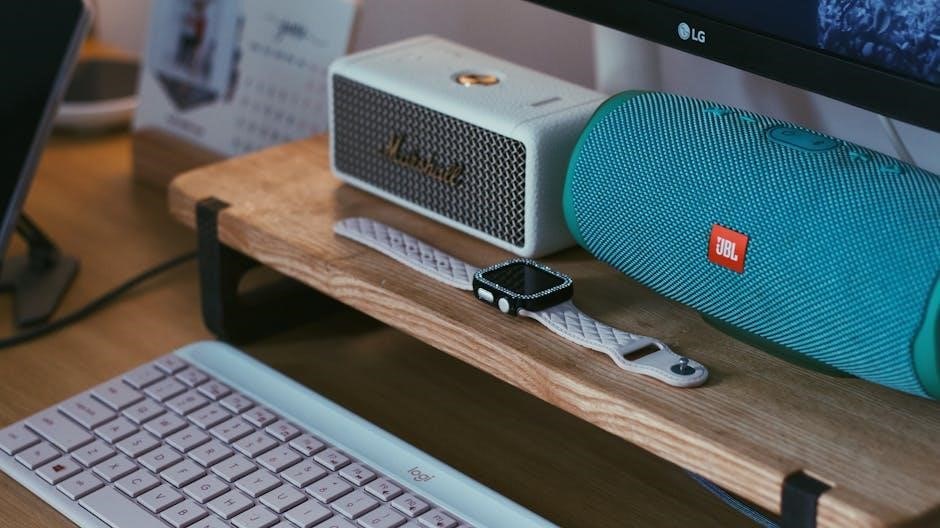
Speaker Controls and Functions
Explore the intuitive controls for power, volume, input selection (Bluetooth, USB, SD, Radio, AUX), and microphone functionality on your Pyle speaker.
Power and Volume Controls
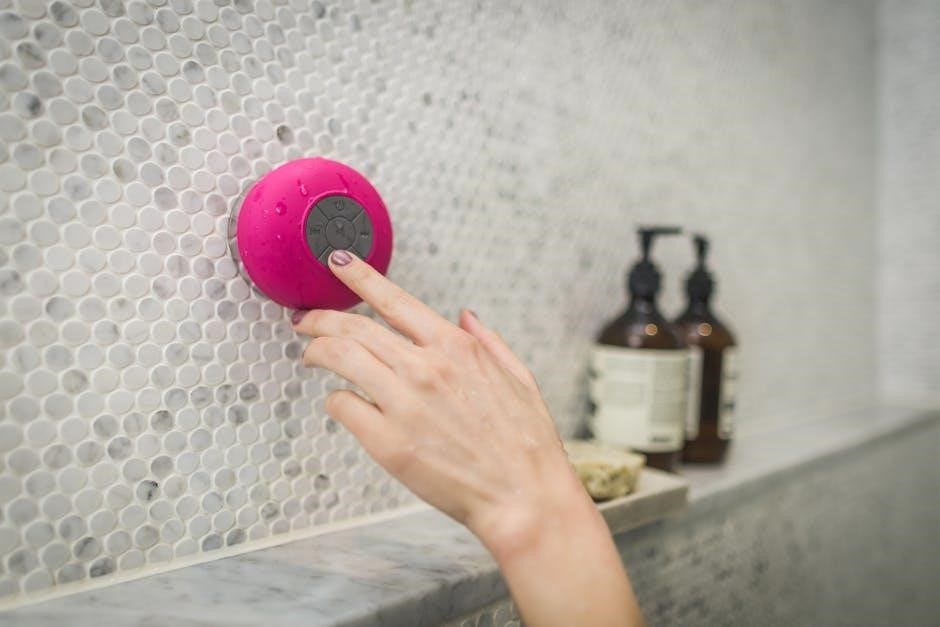
Powering On/Off: Your Pyle Bluetooth speaker typically features a dedicated power button, often located on the rear panel or top control section. Press this button to initiate power-up; a visual indicator, such as an LED, will confirm activation. To power down, press and hold the power button until the indicator extinguishes.
Volume Adjustment: Control the audio output using the volume control knob or buttons. Rotating the knob clockwise increases the volume, while counter-clockwise decreases it. Digital volume controls utilize “+” and “-” buttons for incremental adjustments. Ensure the system is off and controls are at minimum before connecting the speaker. Always start with a low volume level and gradually increase it to your desired listening preference to prevent potential hearing damage or speaker distortion.
Input Source Selection (Bluetooth, USB, SD, Radio, AUX)
Switching Sources: Pyle speakers offer versatile connectivity. Use the “Source” or “Mode” button to cycle through available inputs: Bluetooth for wireless streaming, USB and SD for playing media from flash drives/cards, FM Radio for broadcast reception, and AUX for connecting external devices via a 3.5mm cable.
Operation Details: For FM radio, utilize the scanning function to find stations. When using USB/SD, the previous/next track buttons control playback. Remember to turn off and remove USB/SD cards before powering down the speaker. Ensure proper cable connections for AUX input. Bluetooth pairing is initiated through the speaker’s Bluetooth settings, allowing connection to smartphones and tablets.
Microphone Input Functionality
Microphone Connection: Many Pyle Bluetooth speakers feature a dedicated microphone input, enhancing usability for karaoke, public address, or recording purposes. Locate the “Mic In” port – typically a 6.35mm jack – and connect your microphone securely.
Adjusting Volume: Separate volume controls often exist for the microphone input, allowing independent adjustment of microphone and main audio levels. Experiment to achieve optimal balance. Some models may include echo or reverb effects for vocal enhancement. Ensure the microphone is powered (if required) before connecting. Proper microphone selection and placement are crucial for clear audio reproduction.
FM Radio Operation
Accessing FM Radio: To utilize the FM radio function, select the “Radio” input source using the speaker’s source selection button. Ensure the antenna is fully extended for optimal reception.
Station Tuning: Use the “Next” or “Previous” buttons to scan for available stations. Press and hold these buttons for auto-search functionality. Some models allow direct frequency input. For improved reception, reposition the speaker or antenna. Once a desired station is found, save it to a preset for quick access. Enjoy clear audio broadcasts with your Pyle speaker!
Scanning for Stations
Initiating a Scan: To begin scanning for available FM radio stations, switch to FM mode via the source selection button. Then, press and hold the “Next” or “Previous” track button. This initiates an automatic scan, searching across the FM frequency band for broadcast signals.
Auto-Search Function: The auto-search function will automatically stop at the next available station with a strong signal. Continue pressing and holding the buttons to cycle through all detectable stations. Ensure the antenna is extended for optimal results. Weak signals may require repositioning the speaker.
Saving Favorite Stations
Preset Memory: Pyle Bluetooth speakers with FM radio capability often include a preset memory function for saving your favorite stations. After scanning and tuning into a desired station, locate the memory or preset button – its function may vary by model.
Station Storage: Pressing the memory button typically initiates a storage process. Some models require you to first select a preset number (1-10, for example) before saving. Repeat this process for each station you wish to save. To recall a saved station, simply press the corresponding preset number button.
Advanced Features & Troubleshooting
Explore further! Discover USB/SD playback, recording options on select models (like PPHP1042B), and solutions for common issues like power or pairing problems.
USB and SD Card Playback
Enjoy your digital music! Pyle Bluetooth speakers offer convenient playback directly from USB flash drives and SD cards. Simply insert your loaded media into the designated port on the speaker system.
The speaker will automatically detect the device and begin playing your music files. Utilize the control buttons – typically ‘Previous’ and ‘Next’ – to navigate through your playlist. Holding these buttons often enables fast rewind or fast forward functionality.
Ensure your USB drive or SD card is formatted with a compatible file system (usually FAT32). Supported audio formats generally include MP3, WAV, and potentially others. Remember to safely eject the USB/SD card before powering off the speaker to prevent data corruption.
Recording Function (Specific Models ⎼ PPHP1042B)
Capture your audio! The PPHP1042B model boasts a built-in recording function, allowing you to record audio directly to your connected USB flash drive or SD card. This is perfect for capturing performances, voice memos, or any audio you wish to preserve.
To initiate recording, consult your speaker’s specific button layout – typically a dedicated ‘Record’ button. Ensure a USB drive or SD card is inserted before starting the recording process. The recording quality will depend on the input source and the speaker’s internal settings.
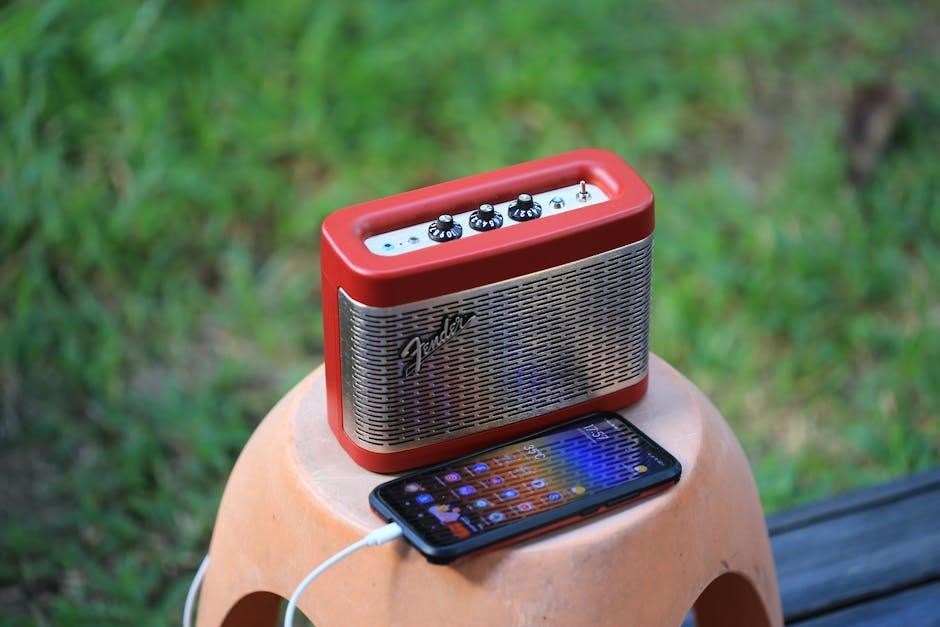
Review recorded files directly from your USB/SD card using a computer. Remember to check the user manual for detailed instructions specific to the PPHP1042B model.
Troubleshooting Common Issues
Facing problems? Here’s a quick guide to resolve common issues. No Power: Verify the power cable is securely connected and the outlet is functioning. Check the speaker’s power switch is in the ‘ON’ position. Bluetooth Pairing Problems: Ensure Bluetooth is enabled on your device and the speaker is in pairing mode. Remove previous pairings and try again.
Sound Distortion: Lower the volume on both the speaker and your connected device. Check for any obstructions near the speaker drivers. Ensure the audio file isn’t corrupted. If issues persist, try a different audio source.
Remember to turn off and remove USB/SD cards before powering down the speaker to prevent data corruption.
No Power
Speaker won’t turn on? First, meticulously check the power cable connection at both the speaker and the power outlet. Confirm the outlet is actively supplying power by testing it with another device. Next, inspect the speaker’s power switch; ensure it’s firmly toggled to the ‘ON’ position.
If using a rechargeable model, verify it has sufficient charge. Connect the speaker to a power source for a reasonable duration before attempting to power it on again. A depleted battery can mimic a power failure. Finally, examine the power adapter for any visible damage.
Bluetooth Pairing Problems
Difficulty connecting via Bluetooth? Begin by ensuring Bluetooth is enabled on your smartphone or tablet. Then, place your device within close proximity – ideally within 3 feet – of the Pyle speaker. If the speaker doesn’t appear in your device’s Bluetooth list, initiate pairing mode on the speaker (refer to the ‘Bluetooth Pairing Instructions’ section).
Clear any previously paired devices from your device’s Bluetooth memory. Interference from other wireless devices can sometimes disrupt pairing; try moving away from potential sources. Restarting both the speaker and your device can often resolve connectivity issues.
Sound Distortion
Experiencing distorted audio? First, lower the volume on both your Pyle speaker and the connected device. Excessive volume levels are a common cause of distortion. Check the audio source file itself; a low-quality or corrupted file can produce distorted sound. Ensure the speaker is placed on a stable, flat surface to minimize vibrations that contribute to unwanted noise.
Experiment with different input sources (Bluetooth, USB, SD card) to determine if the distortion is specific to one connection type. If using an AUX cable, verify it’s securely connected and undamaged. Finally, a full battery charge can sometimes improve audio clarity.
Maintenance and Care
Keep your Pyle speaker performing optimally! Regularly clean the exterior, properly charge the battery, and store it safely when not in use.
Cleaning Your Pyle Speaker
Maintaining a clean speaker ensures longevity and optimal performance. Before cleaning, always power off the speaker and disconnect any power sources. Use a soft, dry cloth to gently wipe down the exterior surfaces. Avoid using harsh chemicals, abrasive cleaners, or excessive moisture, as these can damage the finish or internal components.
For stubborn dirt or grime, lightly dampen the cloth with water, ensuring it’s wrung out thoroughly to prevent water from entering the speaker’s openings. Pay particular attention to the control buttons and speaker grille, removing any dust or debris. Do not attempt to disassemble the speaker for cleaning purposes. Regular dusting and gentle wiping will keep your Pyle speaker looking and sounding its best for years to come.
Battery Care and Charging Instructions
To maximize battery life and performance, follow these guidelines. Initially, fully charge the speaker before its first use. Use only the provided charging cable and a compatible power adapter (5V/1A recommended). Avoid overcharging; once fully charged, disconnect the speaker from the power source.
Frequent, short charging cycles are preferable to infrequent, full discharges. Store the speaker in a cool, dry place when not in use, avoiding extreme temperatures. Do not expose the battery to direct sunlight or heat. If storing for extended periods, charge the battery to approximately 50% capacity. Improper battery care can reduce lifespan and potentially damage the unit.
Storage Recommendations
Proper storage extends the life of your Pyle Bluetooth speaker. When not in use, store the speaker in a cool, dry environment, away from direct sunlight, excessive heat, and humidity. Avoid storing in areas prone to dust or extreme temperature fluctuations.
Before long-term storage, it’s advisable to charge the battery to around 50% capacity. This prevents complete discharge, which can damage the battery. Protect the speaker from physical impacts during storage. Keep the original packaging if possible, or use a protective case. Regularly check the speaker if stored for extended periods to ensure battery health and prevent potential issues.
Related Posts
ge top load washing machine manual
GE top load washing machines combine efficiency, durability, and advanced…
powera xbox one controller manual
The PowerA Xbox One Controller offers a budget-friendly, licensed gaming…